Tuesday, June 22, 2010

[Relegatedz Rankings] 10 Most Gruesome Torture Tools

You may have watched gory movies like Saw, The Final Destination or The Texas Chainsaw Massacre without even flinching but what lays ahead will surely redefine your perception of torture....presenting to you the 10 Most Gruesome Torture Devices of Medieval times...

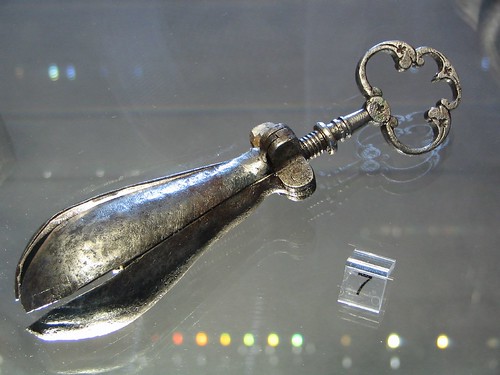
10. The Pear of Anguish
A form of torture reserved for blasphemers, homosexuals, liers, women who had a miscarriage and adulterers.
This pear shaped torture tool was inserted in one of the victim's orifices (mouth, vagina or anus, yikes!) and as the torturer turned the screw the 'leaves of the pear' opened up inside the victim. Although not deadly by itself but the excruciating pain that accompanied its function was enough to make the tortured pass out.

9. The Screw

One of the most effective tools to churn out the required information from a prisoner, the Screw slowly crushed the victim's fingers, toes, elbows or knees.

8. The Boots
A torture devices that made a victim's legs completely useless. It consisted of two curved iron sheets that were screwed around the legs of the unfortunate. The many wedges on the inside were then made use of as the torturer repeatedly struck the sheets with a hammer. The victims often had their legs reduced to minced meat and crushed bones, not to mention the bone marrow that 'sauced' the remain!

7. Guided Cradle
Imagine sitting on top of a a sharp, pyramid-like structure with your arms and legs all chained up. The torturers would yank you up and then let you fall on that penetrating thing! A slow and painful death through impaling occurs. Lucky us! Not living in medieval Spain!

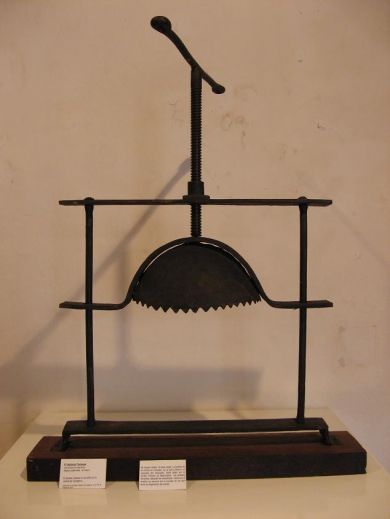
6. Head Crusher
The chin of an unfortunate victim ends up on the lower bar while the cap is slowly screwed on to his/her skull. This purely painful device was one of the torturers' favorite throughout the medieval ages. Imagine when the skull is crushed by that cap!

5. The Spanish Donkey


The name may sound a bit amusing but the torture this device 'bestows' upon its 'riders' is excruciating even to think of. The victim sits astride the sharpened pyramidal knife with weights usually hanging from his/her feet. In a few hours the targeted person is sliced in half from his/her own weight... initiating from a very painful point too! 

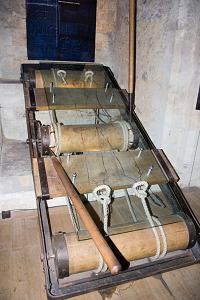
4. The Rack
The rack was one of the most painful forms of torture device to be used in medieval Europe. The accused was usually laid across the raised platforms with his/her arms and legs tied firmly, the torturer then turned the rollers and the victim's joints would snap one by one due to extreme stretching!

3. Iron Maiden
Many argue that this tool of torture was never actually used, but there is no concrete fact to support their claim so this tool finds the number three spot on my list. The Iron Maiden is more like a coffin lined on the inside with strategically placed iron nails that would impale the victims in the eyes, the chest and the back but will miss the vital organs, like heart or lungs so that the unfortunate person inside would live for a period of excruciating pain and profuse bleeding.

2. Inquisitional Chair
The Spaniards had a taste for inventing gnarling torture devices but nothing seems to beat their famed Inquisitional Chair. A person unfortunate enough to be strapped tightly to this 'chair' would experience unending pain as hundreds of nails pierced his/her flesh and if this wasn't enough the torturers would push down on the unfortunate soul for added penetration. Moreover there were reports of people also being 'cooked' on this chair as the torturers heated the poor victim until he/she was roasted alive! This is some torture!

1. Catherine Wheel
Without doubt, the most gruesome torture device ever used! The usage of this tool of torture was most frequented in medieval Germany. The victim had his/her major joints first crushed with a specially strengthened hammer. Then the gelatinous remains were twisted around the spokes of the wheel and the unfortunate person was left at the mercy of the outside world, often 'treated' with rotten tomatoes, fecal matter and other 'luxuries' before the crows and vultures took toll and the poor soul died a horrible death.

Monday, June 21, 2010

Science Watch (June 2010)

M back! Starting off with this week's top scientific stories...:-)

Chimp Wars


Researchers have discovered that gang wars and territory take-overs are not limited to us humans. Our closest cousins, the chimpanzees, are also pretty good at it!
Chimp groups were observed to send out patrols in rival's territories and strategically take out their opponents, subsequently increasing their territory in fatal turf wars.


Scientists 'link-up' Artificial Genome

Craig Venter and Co's $40 million investment finally bore fruit as a 'hollowed-out' bacterium cell rose from the dead and multiplied with a synthetically manufactured DNA molecule.
The USA based team of scientists, lead by Venter, used a computer to link-up alternate base pairs to give a artificial DNA molecule similar to that of a Myco. mycoides. This synthetic DNA when transplanted into a 'dead' specimen of Myco. capricolum which then successfully restarted its operation and reproduced.

Largest bone-bed of dinosaurs discovered near Alberta
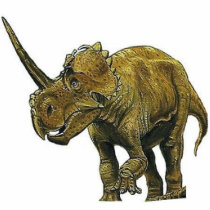
A dinosaur bone-bed consisting of thousand's of bones from Triceratops' cousin Centrosaurus was discovered by a group of scientists near the Canadian city of Alberta.
The site is spread over an area of 2.5 km. square and the bones discovered exclusively belong to the herbivore Centrosaurus which lived a good 10 million before its famous, movie-star cousin Triceratops. The number of specimens has been estimated to be at at least over a thousand which also indicates that dinosaur herds were much larger than previously thought.


Out Hidden Sense of Touch
Scientists at the University of Liverpool found out that we have some nerve endings that surround our blood vessels and sweat glands!
Upon research on two volunteers who did not feel any pain but could tell hot and cold things apart and detect variations in applied pressure revealed that they do did not posses the normal nerve fibers associated with pain detection but they did have nerve endings surrounding at blood vessels near the skin as well as sweat glands!

Grafting 'New' Livers
A group of investigators from the Massachusetts General Hospital has recently managed to develop a new method for dealing with liver grafts. The researchers say that, in a few years, it may become possible to grow replacement livers using biocompatible tissue scaffolding derived from rat livers, and human-derived cells. Details of the new work will appear in print in an upcoming issue of the esteemed scientific publication Nature Medicine. The research team was based at the MGH Center for Engineering in Medicine.


Sources:


http://www.telegraph.co.uk/science/science-news/7843616/Chimpanzees-gangs-build-empires-by-killing-neighbours-in-turf-wars.html
http://www.reuters.com/article/idUSTRE64J5RY20100526
http://www.theglobeandmail.com/news/technology/science/alberta-scientists-discover-largest-bed-of-dinosaur-bones/article1608423/
http://discovermagazine.com/2010/apr/04-your-hidden-sense-of-touch

Monday, April 19, 2010

Science Watch (April 2010)

Here are this week's top scientific stories...

Hammerhead leap into the tons category.
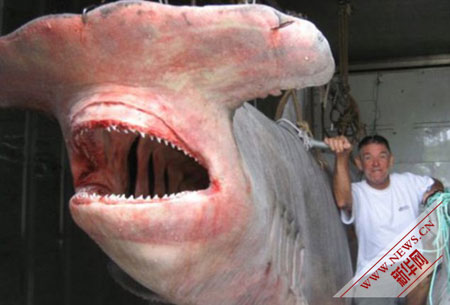
Australian fishermen were excited when they captured a giant Smooth Hammerhead Shark in the east coast of the Australia Sea. The shark weighs 1.25 tons, has a length of approximately 6 meters. It is thought to be 40 years old at least. The Smooth Hammerhead Shark is an endangered species. They are famous for never attacking human beings.


There's life where you think nothing is.
Although these microscopic creatures may look beautiful in photographs, but many of them are not even visible to the human eye. Most are microbes of bacteria, though there are also worms burrowing into the sea bed and ocean insects less than 1mm long.
The only way scientists have been able to make the discoveries is using new technology like DNA sequencing that tells the different species apart and remotely operated submarines that can operate thousands of feet under the sea.
The survey was carried out by scientists around the world as part of a 10-year international project to find out more about the oceans, the Census of Marine Life.
One project took ocean samples from more than 1,200 sites around the world in order to find out more about microbial life. It found microbes with 18 million different DNA sequences, suggesting there could be millions of species although only a few thousand have been described.
Another study found 7,000 new genus of bacteria in the Western English Channel alone. A sponge from Australia's Great Barrier Reef was home to almost 3,000 different types of bacteria.
Previously it was thought there was around 100,000 microbial cells in every litre of seawater but scientists now think there could be one billion.
A separate study of holozooplankton, that look like tiny transparent insects, doubled the number of known species from 7,000 to 14,000.
A study into roundworms found 500,0000 in a single square metre of ocean floor, while there are now 16,000 known species of seaworms.
John Baross of the University of Washington, who is a contributor to the census, said microscopic life in the oceans sustains 90 per cent of life.
He said the new findings was opening up a "huge frontier" in science that could help explain changes in the food chain, weather patterns and carbon cycles. It will also help predict how climate change will affect the oceans.
"Marine animals alone may account for hundreds of millions microbial species. This is a huge frontier for next decade," he said.


There's a new leech king of the jungle.
The new species—dubbed Tyrannobdella rex, or "tyrant leech king"—was discovered in the remote  Pereuvian Amazon, according to a new study.
Puzzling scientists from the start, the up-to-three-inch-long (about seven-centimeter-long) bloodsucker has large teeth, like its dinosaur namesake Tyrannosaur rex.
The T. rex leech uses its teeth to saw into the tissues of mammals' orifices, including eyes, urethras, rectums, and vaginas.
The leech was first recognized from a specimen plucked from the nose of a girl in Peru's central Chanchamayo Province in 2007. After two years of subsequent field research, the team comprising Mark Siddal and colleagues discovered the leech belongs to a globally scattered group of leeches that all suck on mammalian mucus membranes.
Ironically, the ferocious leech may one day help people. Siddall and his team study leeches to develop anticoagulants—treatments that stop patients' blood from clotting.
Medicinal leeches have been used for more than a century for various medical therapies. Finding a new leech helps scientists better understand the molecules that make leech saliva so beneficial.


Deep in the Mediterranean, scientists have discovered the first complex animals known to live without oxygen.
It was previously thought that only viruses and single-celled microbes could survive without oxygen long-term.
But three new species of multicellular animals found during recent research expeditions live comfortably in oxygen-free depths, said team leader Roberto Danovaro of Italy.
"The bodies of multicellular animals have previously been discovered [in oxygen-free zones] but were thought to have sunk there from upper, oxygenated waters," Danovaro said in a statement. "Our results indicate that the animals we recovered were alive. Some, in fact, also contained eggs."
The new animals are microscopic—each measuring less than a millimeter across—and they resemble tiny jellyfish

The creatures seem to thrive in the extremely salty sediments of the Mediterranean seafloor, one of the most extreme environments on Earth.
Most multicellar organisms, including humans, have structures inside their cells called mitochondria, which use oxygen to convert nutrients into energy molecules known as ATP. While these new animals appear to have modified versions of mitochondria called hydrogenosomes, which can produce ATP without oxygen.


Hair Anybody??
Scientists the US are bullish about the discovery of a new hair-loss gene, something that could help the many millions of men with male pattern baldness.
While the gene is specifically linked to a form of hereditary childhood baldness, the researchers from Columbia, Rockefeller and Stanford universities in the US believe that the discovery may in time help those with adult baldness.
The hereditary form, known as hypotrichosis simplex, causes “hair follicle miniaturisation”, says Dr Angela Christiano, professor of dermatology and genetics and development at Columbia. She and colleagues publish their findings this morning in the journal Nature.
The errant gene culprit, APCDD1, was identified by analysing genetic information from several families from Pakistan and Italy affected by hereditary childhood hair loss.
While this occurs in children affected by hypotrichosis simplex, shrinking follicles are also central to male pattern baldness, says Dr Christiano. In both cases the follicles shrink, causing normal thick hair to be replaced by thin fine hair, also known as “peach fuzz”, the authors write.
Dr Christiano points out that while both conditions deliver a similar result, the gene discovery does not fully explain what lies behind male baldness. Yet, the discovery is important for what it might tell us about the onset of thinning hair.
“The identification of this gene underlying hereditary hypotrichosis simplex has afforded us an opportunity to gain insight into the process of hair follicle miniaturisation, which is most commonly observed in male pattern hair loss or androgenetic alopecia,” Dr Christiano says.


Planets can also go in reverse gear! or rather remain in reverse gear!!!

The nine new planets discovered recently by the European astronomers, two of them orbiting backwards around their nearby star, managed to shake an important planetary theory. However, in such solar systems no Earth-like planets are capable to survive.
It was always believe that all planets orbit in the same direction as the rotation of their host star. However, the prevailing theories of how planets are formed may no longer valid after the astronomers’ announced the discovery of nine new transiting exoplanets, two of which having opposite orbits. 
The standard theories of how solar systems are formed indicate “planets coalesce together out of protoplanetary discs of dust and gas that spin around a star’s equator. As these discs rotate in the same direction as the star spins on its axis, planetary orbits ought also to follow this pattern”. 
However, this discovery proves that those theories will not always apply, especially when the solar system contain giant gas planets that orbit very close to their stars. Those gas planets are called “hot Jupiters” which are believed to migrate inwards after forming in the outer parts of solar systems. 
"The new results really challenge the conventional wisdom that planets should always orbit in the same direction as their stars spin”, said Professor Andrew Cameron of the University of St Andrews when his team presented this discovery at the Royal Astronomical Society’s annual meeting in Glasgow, Scotland. 
Unlike the planets in our solar system, two of the newly discovered planets were orbiting backwards around their star. “Our picture of planetary formation and migration may have been colored by the simplicity of our own solar system”, said Professor Andrew. 
Those backwards orbiting planets suggest that giant gas planets could be caught by the "gravitational tug-of-war" between distant objects like nearby stars or planets, which could turn over their orbital alignment, pushing them into an unusual orbit around their transit stars. 
However, “A dramatic side effect of this process is that it would wipe out any other smaller Earth-like planet in these systems”, said Didier Queloz, another leader of the research team, because Jupiter-sized retrograde planets tend to knock out smaller planets.
Links to sources;
Tuesday, April 06, 2010

Relegated'z Rankings [Movies]

Here are the five movies that you must see during this week.
1) Shutter Island, you can bet on this one as the best psychological thriller to have come out after the epic Silence of the Lambs (1991). Martin Scorsese shows just how superb a director he is, the movie is very well crafted with superb action sequences and mystery to the very core that will keep you engrossed throughout the two hour runtime. It is a must watch for anybody who is into great films because this is a film that you should not skip because it delivers what every other release of the mystery/thriller genre can't, the feeling of being there. My rating 9/10. >>>>>>>>>>>>>>>>>>>>>>>>>>>>>>>>>>>>>>>>>>>>  
2) This is probably the golden age of animated films. Just take a look at the last ten to fifteen years and you get to see super-hit CG films like Shrek, Finding Nemo, Toy Story among others, in a frequency unparalleled in any other time period. How to Train Your Dragon is also a part of this increasing chain. With beautifully rendered graphics in unreal detail, a vivid story line and a nice score, this movie possesses something for everyone. Do not miss it. It takes 8/10 from my side. >>>>>>>>>>>>>>>>>>>>>>>>>>>>>>>>>>>>>>>>>>>>  
3) A friend told me about this movie a few days back, I was a bit doubtful about its offerings after hearing its cynical title Hot Tub Time Machine. But when I saw this comedy flick myself then I got to know that I was soooo wrong. It hasn't got all that crap stuff, which we have come to associate with comedy movies in recent times but instead this picture relies on frequent and ideal timing of cool punch lines. Don't skip this one if you want some fun time. 7.5/10 is what i would like to give it. >>>>>>>>>>>>>>>>>>>>>>>>>>>>>>>>>>>>>>>>>>>>  
4) All that hype for nothing, Johnny Depp starrer, Alice in Wonderland fails to live up to the expectations. Burton's effort at transforming the cheery Lewis Carroll novel into a more dark and sinister screen adaption went in vain as the essence of the chirpy, children's story was lost, the essence that made previous AIW adaptions a success. Although Depp's performance as the Mad Hatter was well done, especially that Willy Wonka [from Charlie and the Chocolate Factory] touch that he gave to this character. All in all, I would recommend this film just for the sake of the tremendous effort that has been put in the gorgeous 3-D graphics and the performance of Depp. 7/10 for this one. >>>>>>>>>>>>>>>>>>>>>>>>>>>>>>>>>>>>>>>>>>>>

5) Clash of the Titans, an action movie that has got countless action sequences but zero sense. Poor script, horrid acting and lack of mythological accuracy renders this film a useless package of fights. I have only given it a place on my list because of the fact that it is at #1 on the U.S Box Office at the time I am typing this. Avoid if you have a sophisticated motion-picture sense. 4/10. >>>>>>>>>>>>>>>>>>>>>>>>>>>>>>>>>>>>>>>>>>>>

Monday, April 05, 2010

Relegated'z Rankings [Music]

These are this weeks ranking of mine, for English songs that is...
  1. More from Usher's new album Raymond vs. Raymond is arguably the best track on the CD. It is very well produced and catchy and will continue to rock the clubs for more than just weeks. No wonder Usher's management decided to make it an Itunes bonus track only. 9/10 from my side.
  2. Break Your Heart is a single offering from Taio Cruz with a nice little featuring from Ludacris. Listened to it a few days back on City FM89 and got addicted to it. Awesome beat and lyrics, do give it a try. 8/10 is my rating for this track.
  3. Carry Out is a track from one-in-a-million producer Timbaland's followup to the tremendously successful Shock Value with Shock Value II. Couple an always great performance of Timbaland with this number's groovy beats and bass and you get a track worth listening. Moreover the clever play of words in the lyrics make it a joy to listen. 8/10 is what I would like to give it.
  4. Hey, Soul Sister is a new single by the rock band Train. The band are known for creating soulful number which are not over-produced and keep the essence of the track alive, well Hey, Soul Sister is a prime example of their beliefs of leaving the audience to judge the track and understand its musical meaning rather than pepper them with loops and grooves that are not required by the lyrics. 7.5 outta 10 for this track.
  5. The final track to feature on my this week's top 5 list is, from Rihanna's Rated R, Rude Boy. There was tough competition between Jason Darulo's In My Head and Usher's OMG and Rude Boy because these three songs are spending equal amount of time on my 'Hitz' playlist but in the end Rude Boy won over, thanks to some great loopy beat that you can't get enough of. Probably Fireball and Rude Boy  are the only worth listeining tracks on the much disappointing and explicit Rated R. It takes 6.5/10 from me.

Download Links
More
Break Your Heart 
Carry Out
Hey, Soul Sister 
Rude Boy